
Setting the terms before the comparison begins
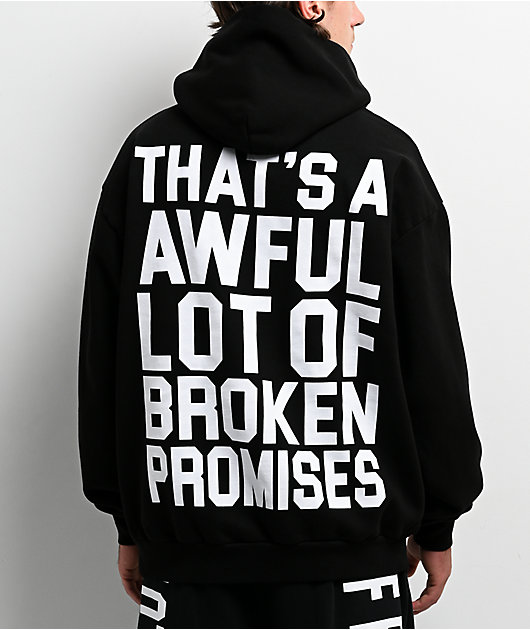
The boundaries go first, because a positioning piece is only as honest as the evidence behind it. The catalogue and product copy of the brand itself, checked in September 2026, are the source of everything claimed here about That’s A Awful Lot Of Cough Syrup. No claim fleece hoodie is made about any rival label’s prices, revenue, output or build quality, because none of that was verified to the same standard. Print a competitor figure today and it is often wrong by the next drop, because streetwear pricing also moves week to week. In a single direction only, then, the comparison runs: here is what is documented for ALOCS, and here is the same question you can put to any other brand yourself. Less tidy than a scoreboard it may be, but every number in it can be checked.
The bracket this label actually competes in
Price by itself does not define a tier, but price combined with construction and distribution gets close. Where cough syrup clothing sits is the upper end of independent streetwear, not the mall-tier graphic bracket. Evidence for that is not a slogan but a set of specifications the brand commits to in writing: named fabric weights, a stated city of manufacture, and a finite catalogue rather than an endless evergreen range. When artwork goes onto blanks sourced wherever they are cheapest, an ounce weight is rarely published, because the weight is whatever the blank happened to be. Labels that cut and sew their own goods usually publish one, since it is a selling point they control. ALOCS behaves like the second group. It sits well below European luxury houses and a similar distance above supermarket graphic tees.
What the verified price ladder actually looks like
Narrow is the word for the confirmed numbers, and a minute is enough to memorise them. Checked at the brand’s own store in September 2026, the ladder ran like this: a core graphic tee about $150, hoodies about $150 to $200, sweatpants about $150 to $200, shorts about $60 to $150, and jackets and workwear about $200 to $350. Take them as snapshots: the brand discounts selectively through sale collections and mystery items, so the number you meet may be lower. No competitor price is printed here, and that is deliberate rather than an oversight. Rate cards in constant motion, uneven regional mark-downs and resellers pricing beyond a label’s control are all part of how rival labels work. Anyone setting awful lot of cough syrup against another name should open both catalogues on the same afternoon and compare like for like. Like garment, like weight, like size: a tee against a tee.
The spec that travels between brands is fabric weight
Because it is a number rather than an adjective, weight is the most useful comparison tool a shopper has. On the brand’s own pages, it is 6.5 oz organic cotton for the classic tee, 16 oz organic cotton for the classic hoodie, 14 oz cotton and recycled polyester fleece for the classic sweatpants, and 14 oz denim for the cargo shorts. These figures put the tees in the midweight range and the hoodie firmly in the heavyweight bracket. Keeping its shape, resisting sagging at the cuffs and taking a long time to dry is what a 16 oz fleece does. A question of fact to ask, rather than a taste argument to have, is what anyone weighing cough syrup shirts against another label’s tees ends up with. Silence on the ounce weight is itself a data point. More often than not it means the garment is a bought-in blank with artwork applied afterwards.
The production model: one city, small batches
The wording is plain enough: alocs clothing is made in Los Angeles, hand-dyed and printed in Los Angeles, and screen-printed locally. Both cost and volume get constrained by it in ways offshore production is not, which makes it an unusual thing to put in writing. Hand-dyeing above all produces visible variation between individual garments, which reads as character to some buyers and as inconsistency to others. Keeping the screen printing in the same city as the cut-and-sew work also shortens the loop between a design idea and a finished piece on a rail. The bill for it arrives as the price tag, since domestic labour is the single largest reason these figures sit where they do. Readers comparing production models should ask each brand where its goods are cut, where they are printed, and whether those two answers name the same place.
Three doors and a drop calendar: the distribution
Just as much about a brand’s tier is said by distribution as by its price list. It sells through its own online store and through three physical locations confirmed in September 2026: 7669 Melrose Avenue and 312 West 5th Street in Los Angeles, and 5410 Almeda Road in Houston. Behind it sits no department-store wholesale network, which is normal for independent streetwear and unusual among the larger names it gets compared to. Stock arrives in batch drops rather than as a continuously replenished range, and roughly 43 percent of the size variants in the catalogue were out of stock when they were counted. Nothing accidental about the logistics explains scarcity on that scale, which is a merchandising model. Anyone weighing brands against each other should check whether a rival restocks its core pieces or lets them vanish, because that one difference changes what ownership feels like.
A comparison anyone can run in ten minutes
The table below is built to be used rather than admired. On the left sits a dimension worth comparing, what is verified for That’s A Awful Lot Of Cough Syrup as of September 2026 sits in the middle, and the question to put to whatever other label is on your shortlist sits on the right. Since filling it in would mean publishing figures that were never checked, nothing in the right column is filled in here. Read the middle column’s prices as a starting point, since they come from the brand’s own store and will change. No verdict is being handed down here, so treat the whole exercise as a repeatable method. Open two product pages side by side and you will settle more than any ranking article can.
| Point of comparison | Verified for ALOCS as of September 2026 | The question to put elsewhere |
|---|---|---|
| What the core tee costs | Priced about $150 at the brand’s own store | The going list price on a comparable graphic tee |
| Hoodie and sweatpants prices | Each of them about $150 to $200 | The list price in the same weight class |
| Shorts plus outerwear and workwear | Shorts at about $60 to $150; jackets and workwear about $200 to $350 | The price, and what the shell or lining really is |
| Weight of the tee fabric | 6.5 oz of organic cotton | Is any ounce weight published at all |
| The hoodie’s fabric weight | A 16 oz organic cotton | Whether a weight is actually stated, not just vaguely described |
| The sweatpants fabric | 14 oz of cotton and recycled polyester fleece | The blend percentages alongside the weight |
| Where it is made | Los Angeles, hand-dyed and screen-printed locally | Where goods are cut, and where they are printed |
| The release pattern | Batch drops, and sizes selling out often | Are core pieces restocked, or retired |
| Where the goods are sold | One online store of its own and three confirmed stores | Owned doors versus wholesale shelves |
| Value on resale | No reliable figures found | Prices actually sold at, never asking prices |
What this comparison cannot answer
Pretending otherwise would be the easy route, but several questions stay open. No claim is made here that a piece holds its price, appreciates or falls, because no reliable resale-value data was found for this brand. Listings certainly exist on the usual secondary platforms, but asking prices are not sales, and sold figures could not be read. Quality stays unsettled in any comparative sense too, because a published fabric weight tells you about substance rather than stitch density, dye fastness or how a print survives thirty washes. On identical terms, nobody has run that test on two brands, this writer included. A catalogue page does not settle customer service, sizing consistency between drops or how a garment ages, which owners judge over years. The checkable facts are mapped here for thats a awful lot of cough syrup, and the rest is your own work.


